
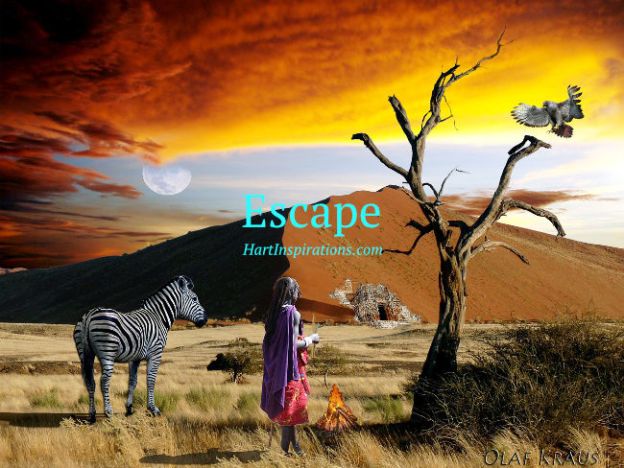
Beyond the babel,
my bliss, beauty, sacredness,
soul cradled in calm.
Perhaps it’s just my lens because I’m a traveler at heart, but I think some of the best stories are rooted in travel. Of course, one person’s travel story is another person’s home story – and that is the essence of these journeys – discovering bits of one’s self in other cultures, and by extension, the call of our humanity.
What does any of this have to do with the haiku? The world’s in a pretty crazy place right now, and many of us are looking for calm places where we can heal and center ourselves. (I would say it’s not only crazy, but society has morphed into a quite abusive place of late. This makes our need for sanctuary more important than ever.) Judy Garland wistfully sang about it in Over the Rainbow, that place where “troubles melt like lemon drops”.
This morning I happened to stumble upon a wonderful story about just such a place of healing, created by a community of formerly abused African women. I’m looking forward to many more stories such as these, as the unfolding of a new humanity continues. It’s a saga of hope and possibilities, and beyond that, a confirmation that our best potential for the future lies in our ability to work together to achieve it.
Ghanaian photographer Paul Ninson on how he was able to visit the ‘village with no men’
The haiku Escape is from my Hart Haiku Vol 1. collection. | Susan L Hart

 Susan L Hart / Author
Beautiful post Susan and a great story about the Samburu women’s village. My daughters and myself have talked about a world devoid of men, wondering what it would be like. Very interesting. Thank you for sharing that post.
LikeLiked by 1 person
I’m not advocating for a world without men, but I am certainly advocating for walking away from abuse, by whoever and whatever tries to inflict that upon us (“us” being humans of any gender). It really is an interesting story, and thanks for reading, Alegria. 🙂
LikeLiked by 1 person
I also would never advocate for a world without men. What’s interesting is the juxtaposition that women feel vulnerable because of them, and also feel protected because of them.
LikeLiked by 1 person
A very interesting observation… Yes.
LikeLiked by 1 person